

Jammin’ Jars 2 Slot Review: How the Tumble Mechanic Shapes Wins
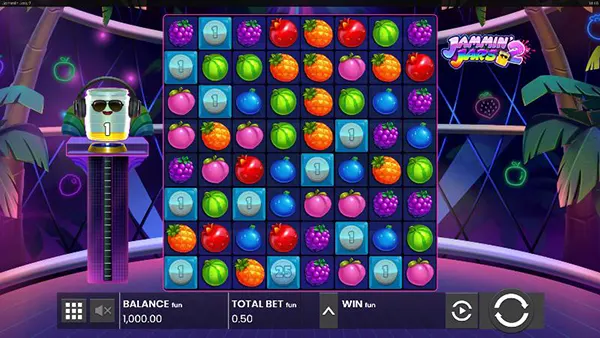
Jammin’ Jars 2 is a modern cluster-style video slot built around one core idea: wins do not come from paylines, but from groups of matching symbols that connect on the grid. The game is best known for its “tumble” mechanic, where winning symbols disappear and are replaced by new ones, allowing a single spin to turn into a chain of payouts. In 2026, this format is still one of the most common designs used in newer releases, yet Jammin’ Jars 2 remains a strong reference point because it combines tumbling with a persistent multiplier that can keep climbing during a feature round.
What Jammin’ Jars 2 Actually Is: Format, Grid, and Core Rules
This title is a cluster pays slot, meaning you are not looking for matching symbols on lines from left to right. Instead, you are aiming to land groups of matching symbols that touch each other horizontally or vertically. The grid is larger than a classic 5×3 slot, giving it more “surface area” for clusters to form. That larger grid is one of the reasons tumble-based games can feel more volatile: the board has enough space for both dry runs and sudden chains of hits.
The game uses symbols with different values (usually themed around fruits, jars, and music-inspired icons). Higher-paying symbols are less frequent and often require larger clusters to pay meaningfully. Lower-paying symbols appear often and mainly serve to trigger tumbles, which matters because each tumble is not only a chance at another win, but also a way to raise the round’s multiplier when you are inside a feature.
From a player’s perspective, the key rule is simple: clusters pay, winning clusters vanish, and new symbols drop in. Because of that, the value of one spin cannot be judged by the first hit alone. A small cluster can be the start of a long tumble chain that ends with a larger and more valuable cluster. This is exactly why understanding tumbles is essential when assessing the game’s real payout behaviour.
The Tumble Mechanic Explained in Practical Terms
In Jammin’ Jars 2, a tumble occurs whenever a winning cluster forms. The game removes the symbols involved in that win and the empty spaces are then filled from above with new symbols. If the new drop creates another winning cluster, the tumble repeats again in the same spin.
This design changes the rhythm of play. In a traditional paylines slot, a spin either wins or it doesn’t. In tumble slots, a spin can “continue” on its own, stacking multiple wins. That means the average win may look small, but occasional spins can stretch into several consecutive payouts without any extra stake being placed.
Another important detail is that tumbles are not equal in value. A tumble chain that only triggers small clusters of low symbols may produce a modest result. The same number of tumbles, if it eventually lands a premium cluster, can swing the outcome dramatically. When people talk about “big moments” in tumble slots, they typically mean a situation where several tumbles lead to either a high symbol drop, a large cluster size, or a feature trigger that turns the same mechanic into something far more explosive.
Multipliers and Sticky Jars: Why the Feature Round Matters Most
Jammin’ Jars 2 is designed so that the base game gives you the core tumble experience, but the real identity of the slot comes from how it treats multipliers in the bonus mode. The jar symbols act as multiplier carriers. When jars appear, they can “stick” and remain in place while other symbols tumble around them, which makes them far more impactful than a standard multiplier that only applies once.
The key concept is that multipliers can increase during a feature sequence. Each tumble in the bonus mode can raise the multiplier values, meaning the later tumbles are often worth more than the early ones. This introduces a built-in escalation: a feature that starts quietly can become extremely valuable if the tumble chain keeps going and the multipliers remain active.
From a risk perspective, this is why the game feels more high-variance than many classic slots. A lot of spins may feel “flat,” but when the bonus mechanics align — multiple tumbles, sticky multipliers, and a solid cluster — the payout can be sharply higher than what the base game typically delivers. In other words, the slot is engineered for peaks, not steady drip-fed wins.
How Sticky Multipliers Change the Math of a Spin
Sticky multipliers are powerful because they keep influencing new symbol drops. If a multiplier jar stays on the grid, every cluster win that intersects its area can be boosted. This is different from one-time multipliers that simply apply to a single win and then disappear.
In practical play, sticky jars make positioning matter. You are not controlling where symbols land, but the game’s outcomes can be heavily affected by whether multipliers remain on the board long enough for tumbles to form paying clusters around them. A multiplier that appears on an empty part of the grid and never connects with a strong cluster may not do much. A multiplier sitting in a busy zone can turn a medium cluster into a memorable win.
Because tumbling can keep going, sticky multipliers also create a “compounding” effect. The longer the tumble chain, the more chances the board has to create a boosted cluster. That is why many of the best spins in Jammin’ Jars 2 are not the ones that start with a big cluster, but the ones that build momentum: small wins trigger tumbles, tumbles keep jars active, and eventually a larger cluster hits while the multiplier values are already elevated.
Playing Strategy and Realistic Expectations in 2026
Jammin’ Jars 2 is a slot where expectations matter. If you approach it like a classic paylines game, it may feel inconsistent because many spins are either losing spins or very small cluster hits. The design leans toward occasional sequences where tumbles and multipliers align. That is not a flaw — it is the intended pacing of this genre.
A sensible approach is to treat bankroll management as a priority. Because this style of slot often has higher volatility, staking too aggressively can shorten a session before the bonus mechanics have a chance to appear. Many players use longer sessions with smaller stakes to give tumble-based games enough time to show their full behaviour.
It is also worth remembering that “more tumbles” does not automatically mean “better results.” A spin can tumble several times and still produce only modest payouts if clusters remain small or low-value. The realistic goal is not to chase tumble length, but to understand that the value comes from the combination of tumbles, multiplier presence, and symbol quality when the feature mode is active.
Common Mistakes Players Make with Tumble Slots
One frequent mistake is judging the game too quickly based on a short run of spins. Cluster slots can look unremarkable until a feature triggers and the multiplier jars start stacking meaningful value. A session of 20–30 spins may not reflect the game’s true payout profile.
Another common error is ignoring volatility. Players sometimes treat the stake size as if the slot pays like an older, steadier game. In practice, the swing can be sharper. If you want to play this kind of title responsibly, the stake should be chosen with the assumption that dry spells are part of the normal pattern.
The third mistake is believing there is a “timing trick” to force better tumbles. The tumble mechanic is governed by random symbol generation. What you can control is only session planning: how much you are willing to spend, how long you plan to play, and when you stop. If you treat Jammin’ Jars 2 as entertainment with occasional high points rather than a predictable win source, the overall experience tends to make more sense.