
Star Trek: The Next Generation Megaways (Atlantic Digital) — Analysing the Megaways Mechanics
Star Trek: The Next Generation Megaways by Atlantic Digital adapts the familiar Megaways format to a science-fiction setting inspired by the well-known television series. The game combines variable reel structures with cascading symbols and several bonus modifiers that influence how many winning paths appear during each spin. Understanding how the Megaways system works in this slot helps explain why the gameplay rhythm changes from round to round and why certain sequences can generate significantly higher payouts than standard fixed-line slots. The following analysis focuses on the internal mechanics of the Megaways engine, the behaviour of the dynamic reels, and the way additional features interact with the base structure.
How the Megaways Engine Works in This Slot
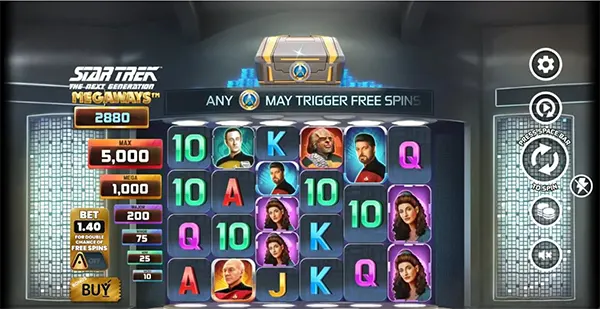
The Megaways system replaces traditional paylines with a variable reel configuration. In Star Trek: The Next Generation Megaways the number of symbols displayed on each reel changes on every spin. Some reels may show two or three symbols, while others expand to six or seven positions. Because of this variation, the number of potential winning ways constantly shifts throughout the session.
When all reels display their maximum number of symbols, the game can reach tens of thousands of possible win combinations. This structure significantly increases volatility compared with classic slots that use fixed paylines. The unpredictability is a key part of the design: players cannot anticipate how many ways will appear before each spin resolves.
The game engine recalculates the number of Megaways immediately after the reels stop. Each new configuration determines how many combinations will be checked for wins. This process happens automatically within the game logic and is one of the main reasons Megaways slots feel more dynamic than conventional reel layouts.
Dynamic Reel Structures and Their Impact
Dynamic reel height is central to the Megaways concept. Instead of identical reels spinning with the same number of symbol positions, the slot engine assigns a random height to each reel. This means the visual grid constantly changes, creating different layouts even during short sessions.
The effect of this system becomes clear during high-symbol spins. When several reels expand simultaneously, the number of potential combinations increases dramatically. A single spin can generate far more possible winning routes than a fixed five-reel game.
However, expanded reels also increase variance. Larger grids create more combinations, but they do not guarantee frequent payouts. Instead, the mechanic balances occasional large wins with periods where the configuration produces fewer possible matches.
Cascading Symbols and Sequence Multipliers
Another major element of the slot’s design is the cascading reels mechanic. After a winning combination forms, the symbols involved disappear from the grid. New symbols then fall into their place, allowing additional wins to occur without starting a new spin.
This cascading process can repeat several times within a single round. Each time a new winning combination appears, the reels collapse again and refill. The system effectively turns one spin into a sequence of interconnected results.
In Star Trek: The Next Generation Megaways, cascading wins are linked to a progressive multiplier during bonus rounds. Every consecutive cascade increases the multiplier value, which can significantly amplify total payouts if several wins occur in a row.
Why Cascades Change the Game Flow
Traditional slot machines resolve outcomes quickly: the reels stop, paylines are checked, and the round ends. Cascading reels alter this rhythm. Because the grid refreshes after each win, a single spin may extend through several stages before the final result appears.
This structure creates a more layered experience. Instead of relying on one outcome, players may see several smaller wins combine into a larger total. The effect becomes more noticeable during free spin rounds where multipliers are active.
From a technical perspective, cascading reels also increase the statistical complexity of the game. Each new symbol drop recalculates potential combinations, effectively generating additional mini-spins within the same round.
Bonus Features and Free Spin Mechanics
The slot includes several features tied directly to the Megaways structure. Scatter symbols trigger free spins, which expand the volatility of the game by introducing multipliers that grow during consecutive cascades. This makes bonus rounds the primary source of high-value payouts.
Free spins also retain the dynamic reel behaviour from the base game. The number of Megaways continues to change on every spin, meaning the potential for large combinations remains present throughout the feature.
Some versions of the game introduce additional modifiers such as expanding reels or symbol transformations during bonus rounds. These adjustments increase the likelihood of multiple cascades occurring during a single spin sequence.
How Megaways Design Influences Volatility
Slots built on the Megaways engine generally display medium-to-high volatility. The structure produces long stretches where outcomes remain modest, followed by sudden spikes when reel heights align with favourable symbol placements.
In Star Trek: The Next Generation Megaways, volatility is further amplified by the cascading system and progressive multipliers. These mechanics combine to create moments where several cascades appear in succession, dramatically increasing the payout of one spin.
For analysts studying slot mechanics, this combination of variable reels, cascades, and multipliers demonstrates how modern slot design has moved beyond static paylines. The Megaways format continues to influence new releases because it allows developers to produce varied mathematical models within a familiar five-reel structure.