

Temple Tumble 2 Dream Drop: How Dream Drop Jackpots Change High-Volatility Slots
Temple Tumble 2 Dream Drop builds on the original cluster-pay concept but introduces a jackpot system that behaves differently from typical high-volatility mechanics. Instead of relying purely on rare bonus rounds and large but infrequent payouts, the Dream Drop feature reshapes how risk and reward are distributed. Understanding this difference helps explain why the slot feels less predictable, yet often more engaging over longer sessions.
How Dream Drop jackpots differ from traditional volatility models
In most high-volatility slots, the structure is simple: base game returns are modest, while the main value comes from bonus rounds or rare feature triggers. Players often experience extended dry periods before hitting a meaningful payout. This model concentrates potential rewards into a few key events, which defines the classic “all-or-nothing” experience.
Temple Tumble 2 Dream Drop introduces an additional layer through four progressive jackpots that can be triggered randomly during gameplay. Unlike fixed bonus payouts, these jackpots are not tied strictly to the bonus feature. This means that even outside of traditional high-paying sequences, there is always a secondary chance to land a significant win.
The result is a hybrid volatility structure. While the base mechanics still lean towards high variance, the presence of jackpot triggers distributes potential rewards more evenly across sessions. It does not reduce risk entirely, but it changes the rhythm of how rewards appear.
The role of random jackpot triggers in gameplay dynamics
Dream Drop jackpots are awarded through a random system rather than through specific symbol combinations. This is a critical distinction, as it removes the dependency on reel outcomes alone. The player is not required to reach a bonus round or complete a particular pattern to access these jackpots.
This randomness creates an additional expectation layer. Even during low-performing sequences, the possibility of a jackpot remains active. It introduces variability that traditional high-volatility slots lack, where losing streaks can feel more absolute.
However, it is important to note that randomness does not equate to frequency. The jackpots are still rare events, especially the higher tiers. What changes is not how often they occur, but when they can occur, which broadens the potential timing of large wins.
Cluster pays, cascading wins, and their interaction with jackpots
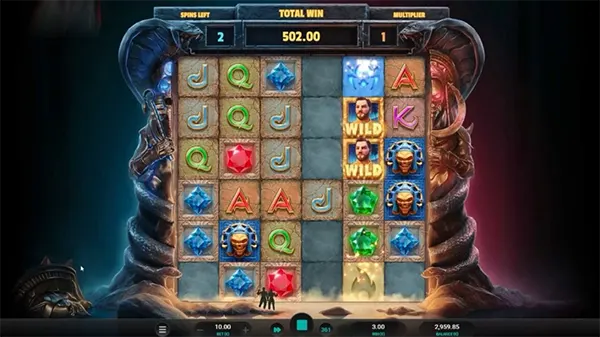
Temple Tumble 2 Dream Drop uses a cluster pays system combined with cascading mechanics. Wins are formed by adjacent symbols rather than paylines, and successful combinations trigger symbol removal followed by new drops. This allows multiple consecutive wins within a single spin.
In a standard high-volatility slot, such cascades often serve as a bridge to larger bonus triggers. Here, they also contribute to maintaining engagement between jackpot opportunities. Even smaller sequences can feel meaningful because they extend gameplay and increase the number of random jackpot checks.
The interaction between cascading wins and jackpots is indirect but important. More cascades mean more game events, and more events increase the statistical chance of triggering a jackpot over time. This creates a sense of progression even when major features are not activated.
Why cascading mechanics support the Dream Drop system
The cascading structure ensures that each spin can evolve into multiple outcomes, rather than ending instantly. This is particularly relevant for a slot with random jackpot mechanics, as it effectively multiplies the number of “opportunities” within a single paid spin.
It also softens the perception of volatility. While the mathematical model remains high-risk, the player experiences more frequent activity. This can make sessions feel less stagnant compared to traditional high-volatility titles that rely on isolated large events.
From a design perspective, this combination keeps the gameplay loop active. The player is not waiting solely for a bonus round but is engaged through continuous micro-events that support the broader jackpot system.
Bonus features versus jackpot-driven rewards
The slot still includes a classic bonus feature with free spins, multipliers, and expanding mechanics. These elements remain the primary source of structured high payouts. In that sense, Temple Tumble 2 Dream Drop does not abandon traditional high-volatility design.
What changes is the balance between structured and unstructured rewards. Bonus features are predictable in how they are triggered and resolved, even if outcomes vary. Dream Drop jackpots, on the other hand, operate outside that structure and introduce an independent reward channel.
This dual system affects how players approach the game. Instead of relying exclusively on hitting the bonus, there is an ongoing possibility of alternative high-value outcomes. It broadens the strategic perception of the slot, even though the underlying mechanics remain chance-based.
How player experience shifts with dual reward systems
In traditional high-volatility slots, sessions are often defined by whether a bonus round is triggered. Without it, the experience may feel incomplete. Temple Tumble 2 Dream Drop reduces this dependency by offering parallel reward paths.
The presence of jackpots can make shorter sessions feel more viable. Even without reaching a bonus, there is still a meaningful chance of landing a significant win. This changes how players perceive session value and risk.
At the same time, the slot does not eliminate volatility. The Dream Drop system enhances unpredictability rather than stabilising outcomes. Players still face variance, but it is expressed through a wider range of possible events rather than a single dominant feature.